Showing posts with label novel. Show all posts

Tuesday, August 6, 2013

It's Kind of a Funny Story by Ned Vizzini

Vizzini, N. (2006). It's kind of a funny story. New York: Miramax Books/Hyperion Books For Children.

Craig Gilner makes getting into the exclusive Executive Pre-Professional High School his life’s work, but once he is accepted and actually begins high school, he finds coping with the pressures of life and school increasingly difficult.  Medication and counseling don’t seem to be helping, and eventually Craig’s desire to commit suicide lands him in the psychiatric ward of a hospital where he encounters others struggling with their own problems and begins to deal with the anxiety and depression from which he is suffering.
            
Craig is a likeable and authentic character and narrator.  Readers will identify with his frankness and openness as he describes the events leading up to his hospitalization.  The subject matter is handled with sensitivity but also warmth and humor.  Even teens who have not struggled with depression will understand and empathize with the scenarios and angst-ridden situations that are a teenage rite of passage.

The novel is loosely based on the author’s experiences with depression and its treatment, which does add believability to the story overall.  However, aspects of Craig’s stay in the psychiatric hospital may come across as somewhat contrived with Craig’s romantic entanglements as well as poker games having as much to do with his recovery as the work of the doctors.  Early in the novel, Craig states that he is looking for a mental shift that will take away his anxiety and allow him to resume more normal habits, and in the end, his recovery may seem to some readers to have been a bit too easy. Despite these potential criticisms, the honesty and wit of the novel will likely charm many teen readers especially those who can find themselves identifying with Craig emotional journey.

Tuesday, July 23, 2013

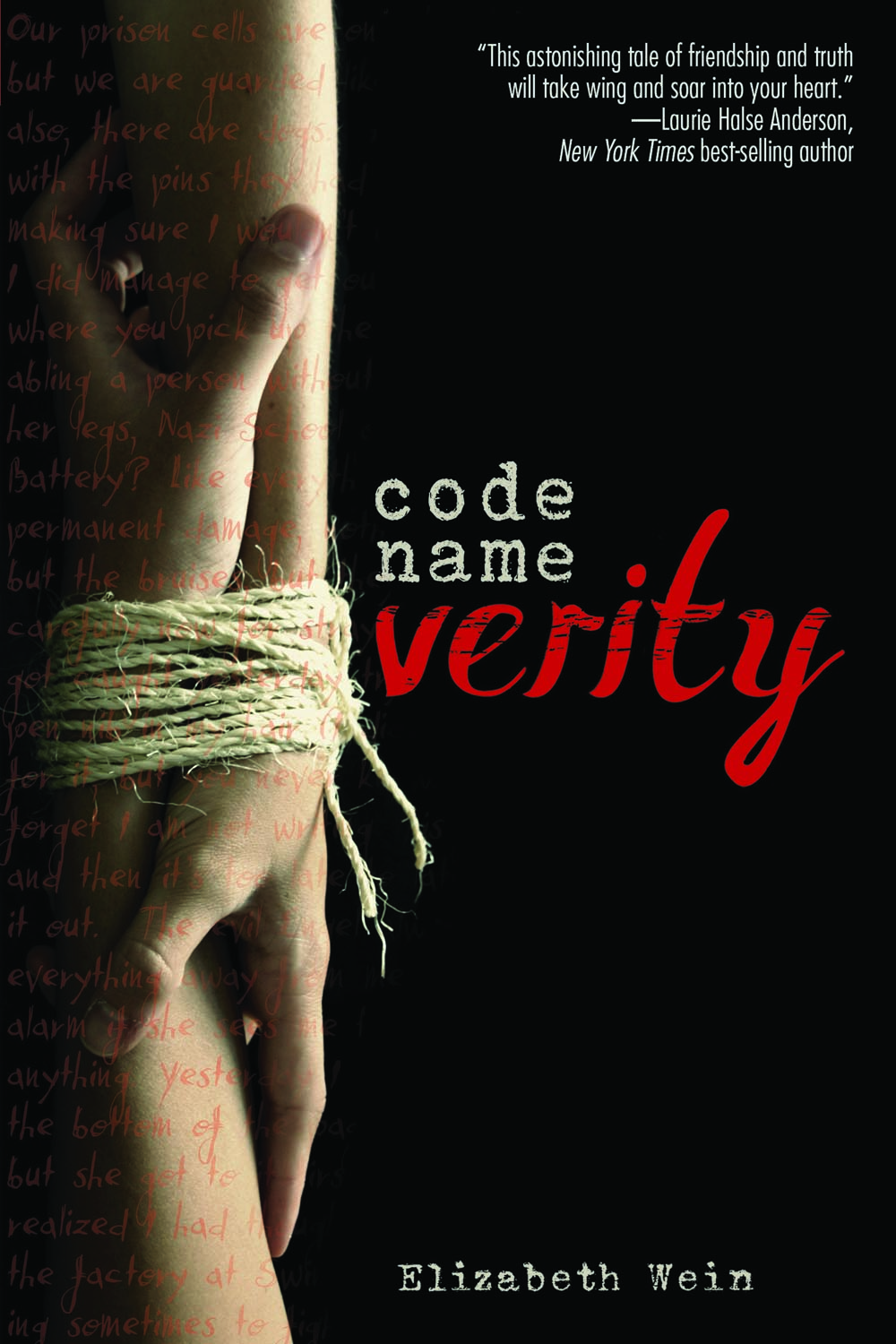
Code Name Verity by Elizabeth Wein

Wein, E. (2012). Code name Verity. New York: Hyperion.

Set in Nazi-occupied France in 1943, “Queenie,” a captured spy is forced to write a confession that encompasses all her knowledge about Allied war efforts.  The result is a novel, scribbled on hotel stationery, recipe cards, and other scavenged paper, which chronicles the wartime friendship that develops between the narrator and Maddie, a Women’s Auxiliary Air Force radio operator turned Air Transport Auxiliary pilot.  Verity scatters just enough details about airplane factories and airstrips to pacify her jailers and torturers, but the real revelations have much less to do with war secrets and much more with true friendship, cowardice, and bravery.
            
The characters in the novel are portrayed with such complexity that readers will relate to Maddie and Queenie even though the historical setting and the dangerous situations in which they find themselves will be far removed from readers.  Queenie proclaims herself a coward in the first sentence of the novel, but so many of her actions and thoughts recorded in her confession make it clear that she has bravely endured hardships and danger and has only been forced into this cowardly act of confessing when she is out of time and opportunity.  Even in torturous conditions, she exhibits some of the same boldness and humor that characterize her early friendship with Maddie.  Queenie’s captor the Nazi officer von Linden could easily become the representation of evil, a Nazi everyman that readers should judge to have no redeeming qualities, but Wein presents him as multi-faceted, with an interest in literature and enough leniency to allow Queenie to tell her story though still a manipulative and cruel villain.  He may never be likable, but he is also not flat.
            
Maddie’s love of flying and her exploits as a pilot allow Wein, who is herself a pilot, to provide significant exposition on types of planes and the mechanics of flying.  These passages can become perhaps too descriptive but the author’s passion for the topic does shine through.  The story is peppered with facts and information about life in Great Britain leading up to and during the war.  Under the guise of confessing all she knows about the war efforts, Queenie is able to communicate to modern readers quite a bit of information about the history of the setting.  Life on a Royal Air Force air field, the Battle of Britain, and the role of women in the war are thoroughly detailed.  Readers may sometimes pause to wonder how she is allowed to write such a personal story by her captors, but ultimately the story is so compelling that suspension of disbelief may not be difficult for readers.

Tuesday, July 16, 2013

Paper Towns by John Green

Green, J. (2008). Paper towns. New York: Dutton Books.

 As children, neighbors Quentin Jacobsen and Margo Roth Spiegelman discover a dead body in the local park, and their friendship is never the same.  Quentin spends the next nine years watching and loving the mysterious Margo from afar.  One Wednesday night near the end of their senior year, Margo reappears in Q’s life, recruiting him to join her on an all night prank adventure.  The next morning as Q begins to wonder what comes next for their relationship, Margo disappears.  This isn’t the first time that Margo has taken off for a few days on an adventure, but when Q discovers a trail of clues she leaves behind, he is certain that he is meant to follow the clues and find her.
            
Reader’s familiar with Green’s Looking for Alaska will find something familiar in this novel.  A reserved, slightly nerdy teenage boy who’s hopelessly entranced by a charming, free-spirited girl will likely remind readers of Miles and Alaska, and there are definite similarities in the dynamics between the two sets of characters.  While Miles finds Alaska fascinating because her attitudes and behaviors are so dissimilar from anything he’s known prior to meeting her, Q grows up next door to Margo and shares in some of those early experiences that shape her, but she still presents a puzzle to Q as her boldness and adventurous spirit are so different from his natural reserve.  Margo’s character is larger than life, and readers may believe Q’s early descriptions of her exploits to be exaggerated, but as the story unfolds, it seems her gift for scheming and thrill-seeking are true.  The other characters in the story especially Q’s two best friends Ben and Radar provide humor and a dose of logic and practicality when Q becomes increasingly absorbed with Margo’s disappearance.  Just as authentically drawn are Q’s parents, therapists who love and support Q but also often see him as they want him to be rather than as he truly is.  This cast of believable characters also seems to emphasize Margo’s dramatic personality.
            
The mystery of Margo’s disappearance is compelling and readers will follow Q’s emotional journey through highs and lows as he follows the clues and searches for her.  Although Q never loses sight of finding out what has happened to Margo, along the way he is just as interested in what the clues tell him about the kind of person that Margo is.  As he searches for her, he comes closer and closer to understanding the person behind the façade she presents to the world.  The mystery story is part of a larger search for identity.  Margo and Q use several different metaphors throughout the book to describe the inner life that represents true personhood, none of which ever completely seem to fit, but by the end of the book, Q is satisfied by what he is able to learn and understand about Margo as well as himself.  While readers may be hoping for a happier conclusion, the resolution of the story fits with the overall tone of the book and provides the answers that those drawn to the mystery of the story will require.
            
Literary allusions are peppered throughout the novel with the most focus on Whitman’s “Leaves of Grass,” which serves as one of Margo’s clues, but fans of the classics will also appreciate the references to the poetry of T.S. Eliot and Emily Dickinson as well as Moby Dick.  Connecting his characters and readers to other literary works is something that Green is able to do in such a way that communicates a clear appreciation and brings a sense of significance of classic literature to his contemporary work.

Tuesday, July 9, 2013

Divergent by Veronica Roth

Roth, V. (2011). Divergent. New York: Katherine Tegen Books.

Set in Chicago sometime in the future, the novel depicts a society that is divided into five factions that value different traits:  Abnegation whose members practice selflessness, Amity known for their peacefulness, Candor who quest for truth, Dauntless who exhibit bravery and daring, and the Erudite who seek knowledge and understanding.  There are also the factionless who are forced to live on the fringes of society.  At sixteen, Beatrice who has been raised in Abnegation, takes the aptitude test that will help her determine which faction she will choose to join.  Her results are inconclusive, and she learns that she is a rare Divergent, someone who possesses an affinity for multiple factions.  Beatrice is warned to keep this information a secret as claiming Divergence could be dangerous.  She chooses to join the Dauntless faction, where she discovers a conspiracy to overthrow the city’s leadership and seize power.  Beatrice’s loyalty to her faction is tested, and she is forced to accept and rely upon all the traits that make her Divergent in order to do the right thing.
            
Roth creates a world that is both recognizable and completely foreign to readers.  Beatrice and other characters in the story must face pressures and influences from family and society while trying to develop a sense of self and choose a path for the future.  The highly regimented faction system may not be a reality, but young readers may feel similar constraints placed on them by peer groups, teachers, or socioeconomic factors.  The depictions of life within the factions show both members who thrive living within the narrow confines of their faction’s defining trait and those who are out of sync or alienated.  There is little room for individuality except for the factionless.  For teens who are often struggling to find a balance between fitting in and autonomy, the society of Divergent could provide some valuable perspective.
            
In addition to the societal issues addressed in the novel, through Beatrice’s training and initiation in Dauntless, readers are exposed to a world of aggression, combat, and survival.  Like other popular dystopian and fantasy novels, the characters find themselves in situations where they must rely on their own strength, skill, and cunning to survive.  While this world of weapons and tactics may not be a part of reality for today’s young adults, these scenarios demonstrate important lessons about strength and strength of character while also providing an escape into a world where characters experience situations and trials that are far removed from the lives of readers.
            
The relationships explored in the novel are another element that will likely be appealing to readers.  Beatrice finds herself making friends with a variety of characters who are very different from her, and the first person narration conveys how these relationships help her to grow out of the sheltered life of her old faction to understand the world more.  The developing love story between Beatrice and her instructor Four is described with emotion and authenticity that will resonate with readers.
            
As with many fantasy and dystopian novels, the main character faces harsh realities and impossible dilemmas, and the overall tone can be read as bleak or dark.  Since this is the first book in a trilogy, there is no bright happy ending to wrap up the story.  The characters face external dangers and villains as well as internal fears and personal grief, and some readers may be depressed by the tragedies and conflicts, but many readers will respond to the complex heroes of Beatrice and Four and find a connection to this story.


Tuesday, July 2, 2013

The First Part Last by Angela Johnson

Johnson, A. (2003). The first part last. New York: Simon & Schuster Books for Young Readers.  

Bobby is a teenage father living in New York City.  He tells his story of life with his newborn daughter Feather and the countless ways that his life is transformed by her existence.  The responsibility of caring for a child at such a young age while still balancing school, family, friends, and decisions about the future is daunting, but Bobby is determined to make the right decisions for his daughter and their future together.
            The novel begins just a few days after Bobby brings Feather home from the hospital.  The chapters alternate between the first few months of her life and flashback descriptions that begin with the day that Bobby’s girlfriend Nia tells him of her pregnancy.  The two timelines blend to create a story that keeps the reader engaged.  Although it’s obvious in one sense where the “Then” chapters are leading since the reader knows from the “Now” story line that Bobby is raising Feather with support but little direct assistance from his parents, it becomes clear early in the novel that both timelines are building towards a climax that the reader may not expect.  The narrative style is episodic in nature, describing key events that lead to future consequences as well as conversations, interactions, or reflections that are representative of the relationships among the characters.  
            Bobby’s narrative voice seems authentic, conveying the fear and confusion alongside his determination and love for his daughter.  He is frank about the realities he faces in raising a child alone, conveying both the resentment he secretly feels about losing his own childhood and the tender devotion and amazement he feels at Feather’s existence.  The novel reads a bit like poetry.  The language is sparse in places but very powerful and descriptive.
            There is foreshadowing leading up to the conclusions of both timelines that connect then and now into one linear story, but Bobby’s final decision about his and Feather’s future may still seem shocking or even unrealistic to readers, especially after the realistic way that Bobby has been portrayed throughout most of the book.  Eve with this slightly incongruous ending, the result  
is a powerful novel.

Where Things Come Back

I enjoyed Where Things Come Back so much that I decided to make it the subject of my book trailer assignment for this class.  One of the requirements was to incorporate spoken narration as well as text.  I hate the sound of my recorded voice so much, I seriously considered hiring someone to do it.  In the end, it's my voice saying "Welcome to Lily, Arkansas."


Tuesday, June 25, 2013

Where Things Come Back by John Corey Whaley

Whaley, J. C. (2011). Where things come back. New York: Atheneum Books for Young Readers.

The small town of Lily, Arkansas is situated halfway between Little Rock and Memphis and is the sort of place that people dream of leaving.  The summer before his senior year of high-school, Cullen Witter witnesses people coming to Lily instead of leaving.  An alleged sighting of the Lazarus woodpecker thought to be extinct for seventy years brings notoriety to Cullen’s hometown.  The woodpecker becomes a symbol for second chances to the people of Lily and the bird enthusiasts who flock there, but when Cullen’s younger brother Gabriel disappears without a trace one night, his family and friends are left hopeless, desperately in need of a second chance. 

Whaley’s novel is rooted in a real place and time.  The ivory-billed woodpecker, long thought to be extinct, was spotted in the Big Woods region of Arkansas in 2004, and its existence  has been the subject of debate among ornithologists for the past several years.  Teens in Arkansas, especially in the central and delta areas surrounding the Big Woods will be old enough to remember the extensive news coverage surrounding the bird as well as the locally-published children’s books such as Big Woods Bird (Luneau & Bennett, 2005) that were distributed in classrooms across the state.  While the story of Gabriel’s disappearance and the Witter family’s struggle to deal with the loss is the true focal point of the novel, the woodpecker subplot is woven throughout and comes to have great significance in Cullen’s recollections of that summer.  Readers familiar with Arkansas may also appreciate the many geographic names from around the state that are used as character names throughout the novel. 

Interspersed with the chapters narrated by Cullen, are sections told from a third-person point of view that introduce the character Benton Sage, a young missionary in Ethiopia and later a college student in Georgia.  His experiences and relationship with his roommate Cabot Searcy at first appear to be completely unrelated to the events unfolding in Lily, but the author eventually weaves these two story lines together through some surprising twists and turns.  Benton and Cabot both demonstrate the same single-minded passion and pursuit of goals that characterizes the zealous woodpecker-seekers in Arkansas, and their particular interest in biblical texts and apocrypha connects to the other storyline through the name of the woodpecker.  Of course, there is no Lazarus woodpecker, the name is an allusion to the biblical story of one who returns from the dead, underlining the hope and belief in second chances that the bird represents to the town. 

Although the novel is has a realistic setting and plot, Cullen’s narration often turns fanciful with extended descriptions of his zombie-filled daydreams and nightmares as well as his notations of amusing book title ideas he records in his journal.  Although these elements provide some humor, it can sometimes be a little tricky for the reader to determine where reality ends and fantasy begins.

Small town life is authentically portrayed as are the teen characters of Cullen, his best friend Lucas, and the various friends, enemies, and love interests Cullen describes.  The descriptions of how each family member and close friend deals with Gabriel’s disappearance as well as Cullen’s perception of how the town bears with them through the loss are vivid and realistic.  Readers who have experienced tragedy or loss will appreciate how the narrative demonstrates the duality of time marching onward and standing still.  Although the subject matter is serious and the emotional descriptions haunting, Whaley provides moments of humor and levity that seem to mimic the ups and downs of real life.

References
Luneau, T. R., & Bennett, T. (2005). Big Woods bird: An ivory-bill story. Little Rock, AR: Kury Lane Inc.


Tuesday, June 18, 2013

Speak by Laurie Halse Anderson

Anderson, L. H. (1999). Speak. New York: Farrar Straus Giroux.


Melinda Sordino enters the ninth grade “clanless,” without a group of friends to define her identity.  Her former friends shun her, and when she does draw the notice of teachers or other students, it’s the wrong kind of attention.  She withdraws into her own haunting thoughts, burying her pain in long silences and a year-long art assignment that will push her to deal with the tumultuous memories that plague her.

Despite the fact that it was written over a decade ago, the subject matter of Speak could have been inspired by much more recent headlines:  a teenage girl, drunk at a party, a victim of sexual assault at the hands of a popular athlete.  The only difference in Melinda’s story and the real-life tragedies that have made news in the past few years is that there’s no social media to testify to what happens to her.  Her rape is a closely guarded secret—one that she manages to compartmentalize and keep even from herself much of the time, yet she is still criminalized by peers who don’t know the whole story.  Melinda is left to deal with the emotional fallout of her ordeal on her own.          

Although Melinda stops communicating with her parents, teachers, and classmates, her first person narration of the story is highly descriptive, full of evocative imagery and perceptive observation of the people and events around her.  Her thoughts and judgments of others are sometimes biting in their sarcasm, but this trait lends an authentic teenage voice to the narration.  The realism, raw emotion, and feelings of powerlessness that Melinda expresses will likely find a ready audience with teenagers who can often feel marginalized and silenced due to parents, teachers, and peers who do not understand or provide support to their inner struggles.

Throughout the novel, Melinda must endure encounters with her attacker who goes to her school, and while he seems to taunt her through these interactions, it’s somewhat unclear whether this is Melinda’s perception or what’s actually happening between them.  A final confrontation near the end of the book brings them face to face once again and seems to reveal her adversary as a person who displays every confidence that he will continue to get away with his abusive treatment of girls.  While it is easy to sympathize and relate to Melinda, even for people who have not experienced a similar trauma, the antagonist and his actions seem almost too horrible to be believed.  Perhaps his character is just as realistic as the others in the story, but the way he maneuvers himself into his final scene with Melinda seems just a little far-fetched.

The difficult subject matter have made this novel the target of challenges and attempted censorship, but the realistic portrayal of the cruelties of high school and adolescence along with the ultimately hopeful message provide ample cause to keep this book on library shelves and easily accessible to teen readers.           

Saturday, October 13, 2012

What My Mother Doesn't Know by Sonya Sones

Sones, Sonya. 2001. What my mother doesn't know. New York: Simon & Schuster Books for Young Readers. ISBN 0689841140

Summary:

Written in free verse, the novel is narrated by fourteen-year-old Sophie who is navigating life, love, and high school with varying degrees of success.  In short titled poems, readers learn about Sophie’s fighting parents, best friends, and the birth and slow demise of her relationship with Dylan.  A mystery encounter with a masked man at the Halloween dance fill her with questions and longing, and when his identity is eventually revealed, Sophie must make some mature decisions about her life, identity, and popularity.

Analysis:
Sophie’s voice is authentic and emotional, conveying the confusion, passion, and angst of adolescence without shying away from sensitive topics.  The lines of most of the poems are short but full of imagery and description.  Repetition is used for emphasis in several poems, most notably and effectively in a poem describing the after-effects of a fight with her mother entitled “I Hate Her” in which she details a list of things she hates about her mother most of which have nothing to do with their fight. The concise but descriptive language manages to convey both the action of the narrative and the full range of emotions in a unique way which will connect with teen readers while also resonating with adults who can still remember the elation and tragedy of growing up.

Awards & Reviews:
ALA Best Book for Young Adults (2002)
ALA Top Ten Quick Pick for Reluctant Young Adult Readers (2002)
International Reading Association Young Adults' Choice (2003)
Winner of the Iowa Teen Book Award (2005–2006)
Starred review, Publisher's Weekly:  "With its separate free verse poems woven into a fluid and coherent narrative with a satisfying ending, Sophie's honest and earthy story feels destined to captivate a young female audience, avid and reluctant readers alike."

Starred review & Editor's Choice, Booklist:  "The poetry is never pretentious or difficult; on the contrary, the very short, sometimes rhythmic lines make each page fly."


Starred review, Kirkus Reviews:  "A verse experience that will leave readers sighing with recognition and satisfaction."


Connections:

  • Incorporate into a Banned Books Week display, discussion, or Read-Out.  
  • Introduce to young writers' group to encourage journaling and authentic voice
  • Make connections to the art in the book including Renoit and the Museum of Bad Art (museumofbadart.org)
  • Connect readers of the book with the author's website (sonyasones.com) for background information, writing advice, and blog.
  • Other novels in verse for young adults:
Herrera, Juan Felipe. 1999. CrashBoomLove: a novel in verse. Albuquerque: University of New Mexico Press. ISBN 0826321135
Sones, Sonya. 2004. One of those hideous books where the mother dies. New York: Simon & Schuster Books for Young Readers. ISBN 0689858205
Sones, Sonya. 1999. Stop pretending: what happened when my big sister went crazy. New York: HarperCollins Publishers. ISBN 0060283874
Sones, Sonya. 2007. What my girlfriend doesn't know. New York: Simon & Schuster Books for Young Readers. ISBN 0689876025
Tregay, Sarah. 2012. Love & leftovers: a novel in verse. New York, NY: Katherine Tegen Books. ISBN 0062023586

Wednesday, August 1, 2012

Sample Program: Elementary Age


Theme:  Origami

Target Audience:  3rd-6th grades

Rationale:  Origami books are in high demand in our children’s department, and as a result, we have a quite extensive and relatively new collection of origami books for various skill levels.  The interest also indicates that an origami-themed program will be well-received by patrons. Sullivan (2005) endorses arts/craft programs as entertaining and enriching options for school-age children and further suggests using books to reinforce the craft activity for older children instead of the storytime method of using a craft to reinforce the books.  Craft programs can be a great way to highlight the both the nonfiction and fiction collections.

Day/Time:  During the school year, we have weekly after-school programs on Wednesdays at 4:00, and we have a weekly craft program on Saturday afternoons at 3:00 year round.  This program could be offered at either of these times.  Both programs typically last forty-five minutes to an hour.

Set-up:
  • Recruit volunteers to help guide activities. An adult origami club meets weekly at our library. Use that group to find one or two “experts” who can come and demonstrate techniques and provide assistance to the program participants. Ask them to bring a few sample pieces that are more complex to show the participants. Make use of teen volunteers who have listed origami/crafts as one of their interest areas on the volunteer application.
  • Promote program on print calendar, on library website’s events calendar, children’s department facebook page, and with print flyer (attached). Contact school media specialist/art teacher contacts about posting flyer in schools.
  • Purchase origami paper. A package of 200 sheets is usually around $6 or $7 at most craft stores. If funding is an issue, use colored paper from library supply and cut into squares. Recycled paper with writing on only one side can also be used for most projects.
  • Select projects at beginner, intermediate, and advanced level from origami instruction books in collection. Complete a sample of each project chosen. Search youtube for demonstration videos of selected projects. If videos do not exist for the projects, consider making a demonstration video or ask teen volunteers to make a demo video prior to the program.
  • Set up a laptop with demonstration videos bookmarked plugged into projector so the demos can be shown on the screen. Set up tables and chairs where everyone can see the screen. If multiple laptops are available, consider having one at each table so that demos can be shown for the different skill levels represented.
  • Set each station with appropriate books for each skill level (beginner, intermediate, advanced), sample projects, and a supply of origami paper.
  • Create a display for fiction/narrative books and books about Japan.
  • Assign volunteers and experts to different stations.


Program: 
  • Softly play traditional Japanese folk music in the background.  Be sure to tell participants that origami is a Japanese art form.
  • As participants enter the room, sort them if possible into beginner or experienced groups and direct them to appropriate tables. 
  • Begin by introducing experts from adult origami club and allowing them to show completed projects that they have done. Allow the participants to ask questions of the expert guests. 
  • At the beginner table, participants will be guided through a preselected project such as a boat, plane, cup, or fortune-teller. After the first project, beginners can choose to stay at the beginner table and complete another project or go to one of the other tables to choose a more difficult project. 
  • At the intermediate and advanced tables, participants can choose a project from one of the books. 
  • Volunteers/Experts will demonstrate and assist as needed. 
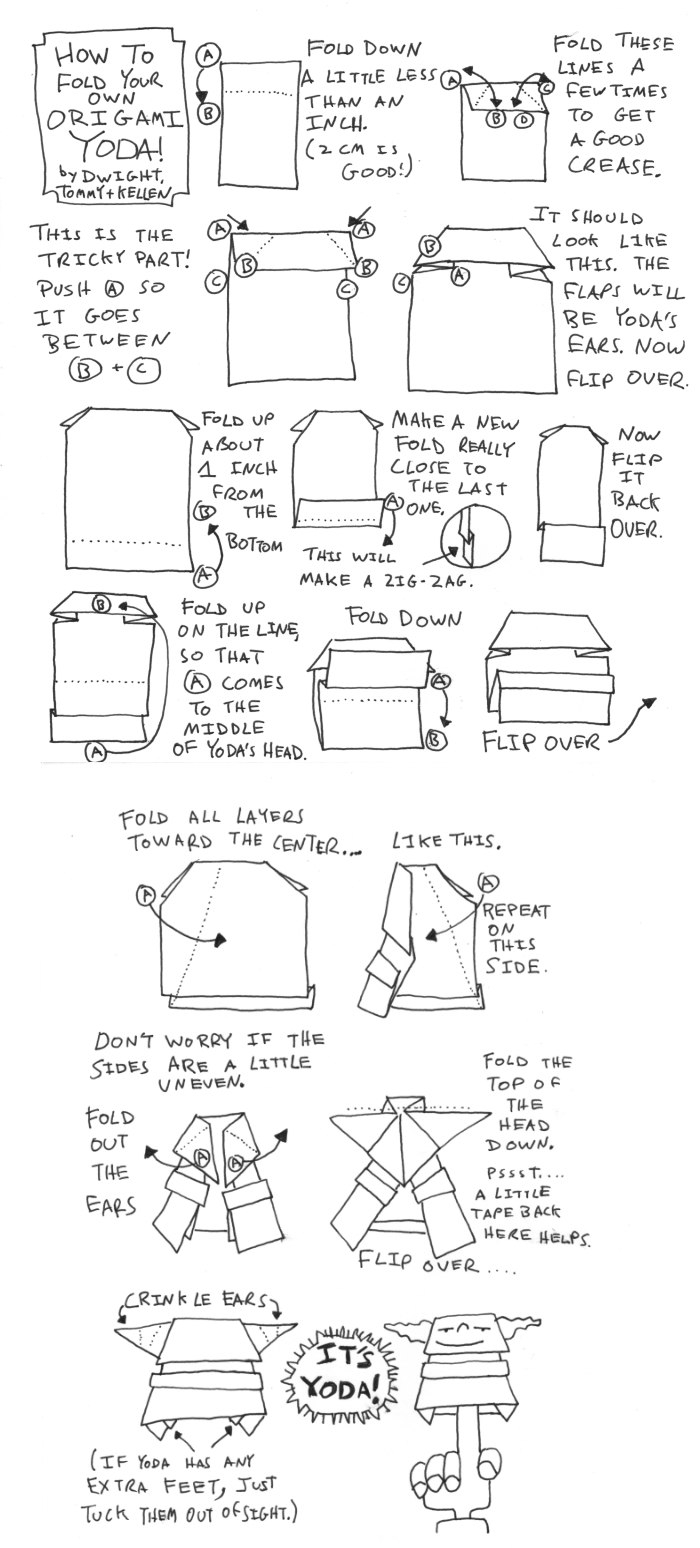
  • Each participant should have time to complete two projects. They can do a third if time permits. Once the projects are complete, we will watch the Scholastic book trailer for The Strange Case of Origami Yoda (http://www.youtube.com/watch?v=gM-JN6D3cAo&feature=related) and a origami Yoda demonstration from the author Tom Anglebrand (http://www.youtube.com/watch?v=LosgVnBDdjw&feature=related) which the children can follow to make their own Yoda. A page of written instructions to make a more complex Yoda is also available from the author’s website http://origamiyoda.files.wordpress.com/2009/10/yodainstructions.jpg). Make copies of these to send home with the participants. 
  • Encourage participants to check out the instructional books or one of the fiction or narrative books that are available or a book on Japan or Japanese art.


Instructional Books:
·         Origami for Everyone: Beginner, Intermediate, Advanced by Didier Boursin
·         Origami by Sally Henry and Trevor Cook
·         Origami:  The Fun and Funky Art of Paper Folding by Trhiranut Boonyadhistarn
·         Origami Zoo:  25 Fun Paper Animal Creations by Paul Jackson and Miri Golan
·         Origami Toys:  That Tumble, Fly, and Spin by Paul Jackson
·         Monster Origami by Duy Nguyen
·         Origami for Fun! By Thiranut Deborah Berry
·         Snap Books Origami Series by Mary Meinking and Chris Alexander
·         Origami Tessellations:  Awe-Inspiring Geometric Designs by Eric Gjerde
·         Ornamental Origami:  Exploring 3D Geometric Designs by Meenakshi Mukerji
·         Unit Polyhedron Origami by Tomoko Fuse
Fiction/narrative books with origami tie-ins:
·         The Pirate Girl’s Treasure:  An Origami Adventure by Peyton Leung (picture book with origami demonstration)
·         The Strange Case of Origami Yoda by Tom Angleberger
·         Darth Paper Strikes Back by Tom Angleberger
·         The Secret of the Fortune Wookiee by Tom Angleberger (release date August 2012)
·         Waiting to Forget by Sheila Kelly Welch
·         Sadako and the Thousand Paper Cranes by Eleanor Coerr
·         1001 Cranes by Naomi Hirahara
·         Little Oh by Laura Krauss Melmed (picture book)
·         The Paper Crane by Molly Bang (picture book)
Books on Japan/Japanese Art and Culture:
·         Several volumes from 952 in nonfiction
·         From Painted Scrolls to Anime:  Literature and the Arts of Japan by Patty Ruland
·         Traditional Crafts from Japan by Florence Temko

References
Sullivan, Michael. Fundamentals of Children’s Services. Chicago: American Library Association, 2005.